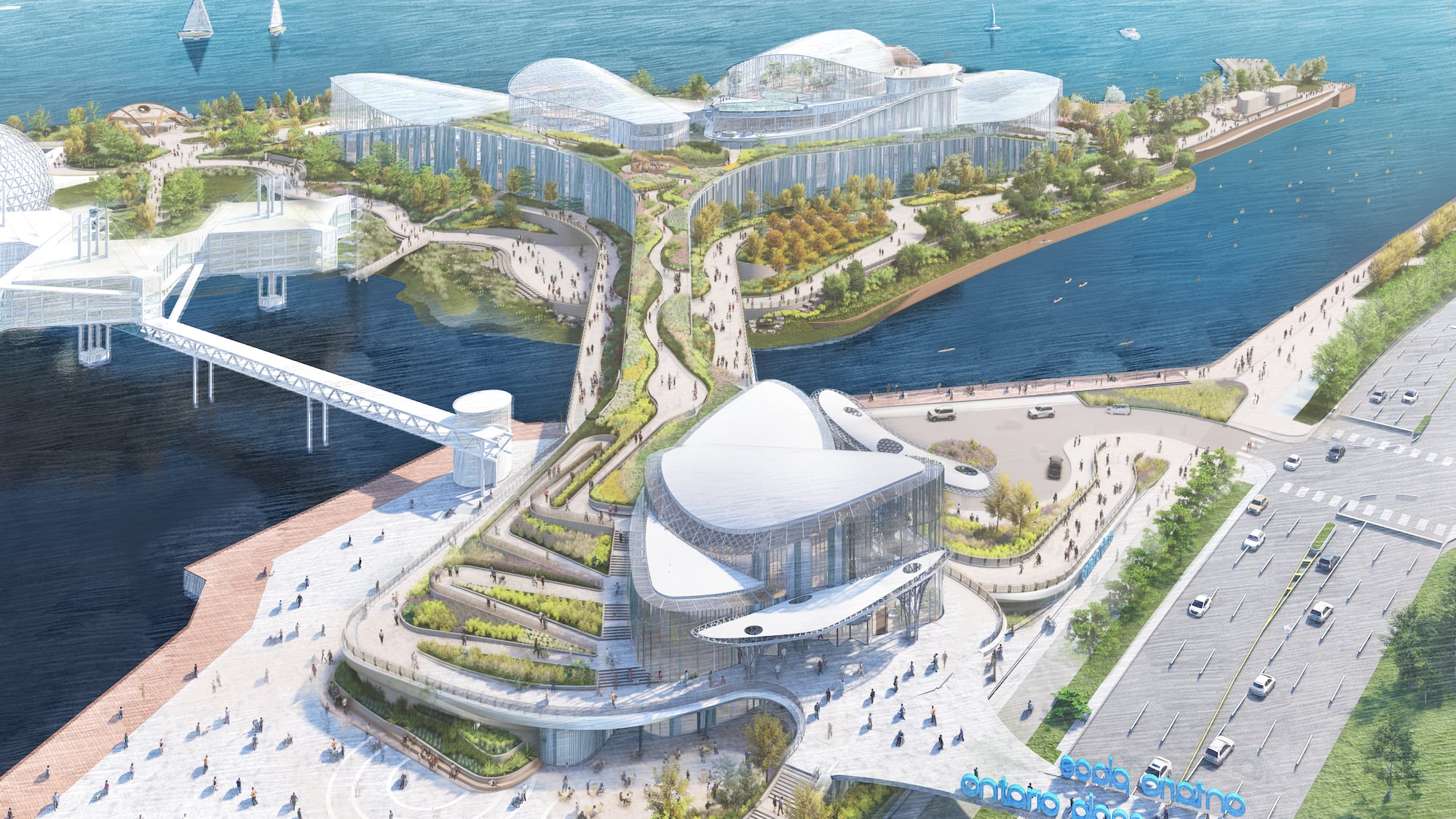
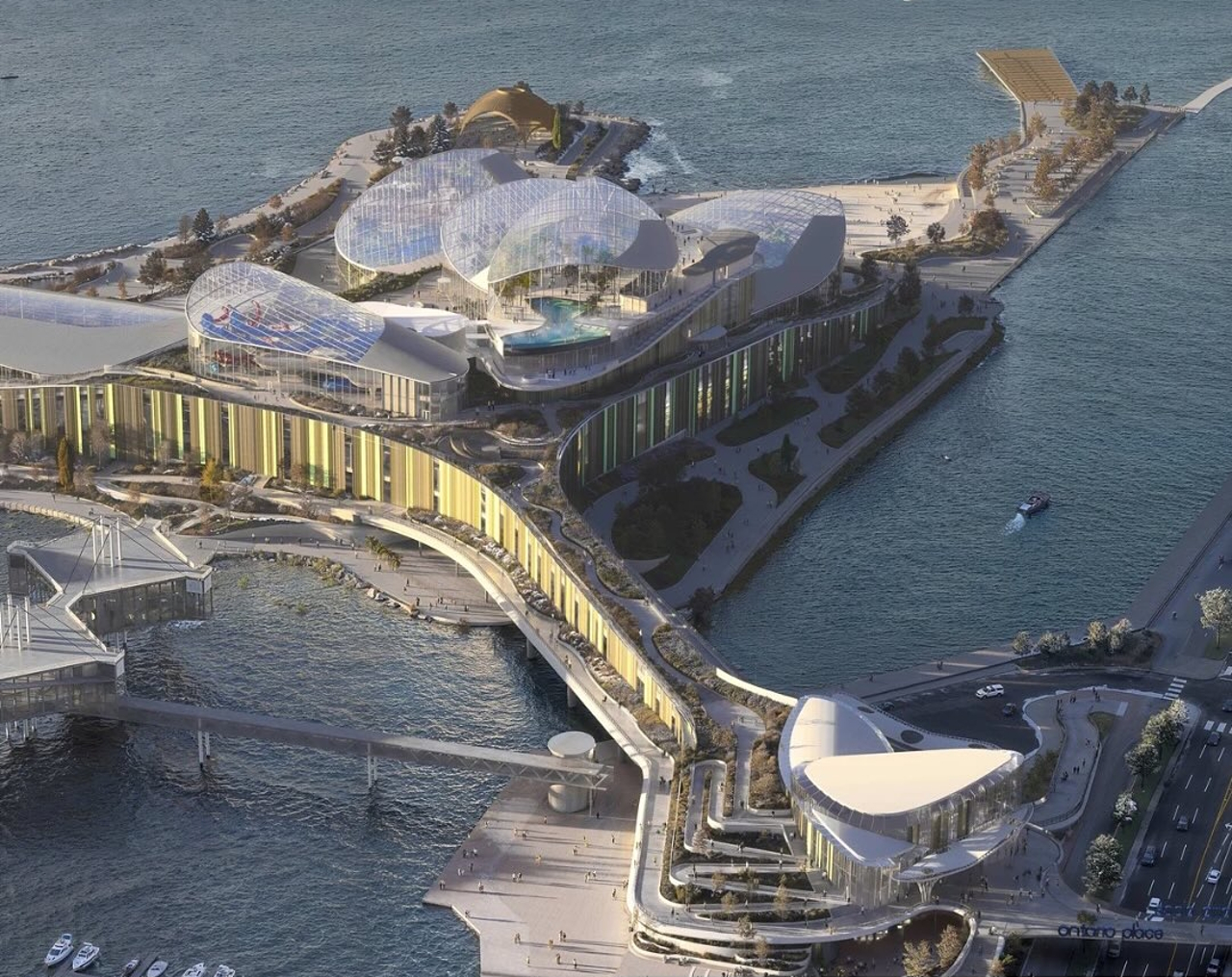
Close your eyes and imagine soaring through the sky over a calm, glassy lake bathed in golden light. Touching down on the promenade, you stroll among leisurely pedestrians. Looking up, you barely register a well-manicured cushion of trees behind the shiny new building that towers before you, reflecting the radiance of the setting sun. As harmonious as it is banal, this familiar backdrop turns public spectacle into reassurance, presenting one future as inevitable.
The province of Ontario’s waterfront proposals at Ontario Place have been repeatedly visualized in this fashion over the past five years. Their evolving design concepts are rendered from digital models of buildings and landscapes. But despite the frequent change, their renders appear fully resolved.
On July 30, 2021, the province of Ontario unveiled the first official images of its Ontario Place redevelopment with international partner Therme. Taking up two thirds of the image’s middle ground is a sprawling mass of greenery enclosed in glass, widely derided as the ‘Mega-Spa’, whose massive size is camouflaged between green splotches around it and the dull metallic skyline beyond.
After critical blowback to this image, the Province waited two weeks before releasing more renderings on August 12, now at a higher resolution and magnified to pedestrian-height perspectives, including one from inside of the spa.
The following year, on November 25, 2022, the Province submitted an application for an Official Plan and Zoning By-law Amendment with a comprehensive package of drawings including perspectival renderings, conceptual site plans, and diagrammatic sections.
Three days later, Therme released a new aerial perspective at a different angle. Facing northwest instead of northeast, the spa buildings now appear to occupy only one-third of the image width. While the buildings still sparkle, they are now desaturated in colour compared to the earlier image. They’re also rendered with softer edges that blur against a more pronounced palette of trees.
Conspicuously, the buildings in the background are also uniformly desaturated to a light grey tone as mute as the adjacent haze of the sky. This rendering choice encourages the viewer to perceive the background buildings as further away than they are — and the spa as smaller than planned.
Nine months later on August 22, 2023, Therme delivered a significant design update to its spa in response to criticism over the loss of public parkland. The angle of the new aerial perspective shifted once more, now looking south over Lake Ontario. Without any buildings in the background to provide a reference for scale, atmospheric haze is amplified further so the spa appears smaller than ever.
Following the now established rhythm of staggered image drops, three weeks later on September 13 the Province submitted revised application materials to the City that now included perspectives digitally rendered in a style mimicking hand-coloured drawings.
On June 24, 2025, the Province released what it labelled ‘final designs’. Most of these images shifted focus away from the spa towards the ‘public realm’ and new infrastructure, including an equally controversial parking structure along Lakeshore Boulevard. In contrast to the September 2023 renderings, these ‘public realm’ images were crisp, detailed, and vibrant in colour, with human avatars as uncanny as they were anodyne.
Yet the single new aerial of the spa retained the faux hand-coloured style from 2023, this time with its angle tilted to mask the entire horizon line. Neither near nor far, the perspective of the spa was disoriented; its relationship to the world, unmoored.
Therme followed two weeks later with a final aerial, rendered through a lens more photo ‘realistic’ and certain than all the rest.
Across this barrage of press releases, exterior perspectives dominate. But the underlying assumptions behind the production of an image are not accessible. It's an interface that demands trust while foreclosing scrutiny. Questions of governance, ecological risk, and equitable access disappear.
But what if an architect wanted to disrupt a politics of inevitability? Could drawing a different type of image subvert the status quo? Speculative images have long allowed architects to test counterfactual futures. Some utopian images, like Yona Friedman’s Spatial City, depict an urbanity that’s purposefully unfinished, inviting adaptation over time.
The distinction matters because some images present a preferred future as already resolved, while others leave room for revision.These open images can serve as tools for different forms of political imagination.
Ontario Place also generated a revealing counterexample. In 2020, the Future of Ontario Place Project, an organization of designers, activists, and academics, hosted a design ideas competition calling for “counterproposals” from young professionals to reimagine Ontario Place in response to the Province’s proffering of these public lands to international developers without public consultation or transparency.
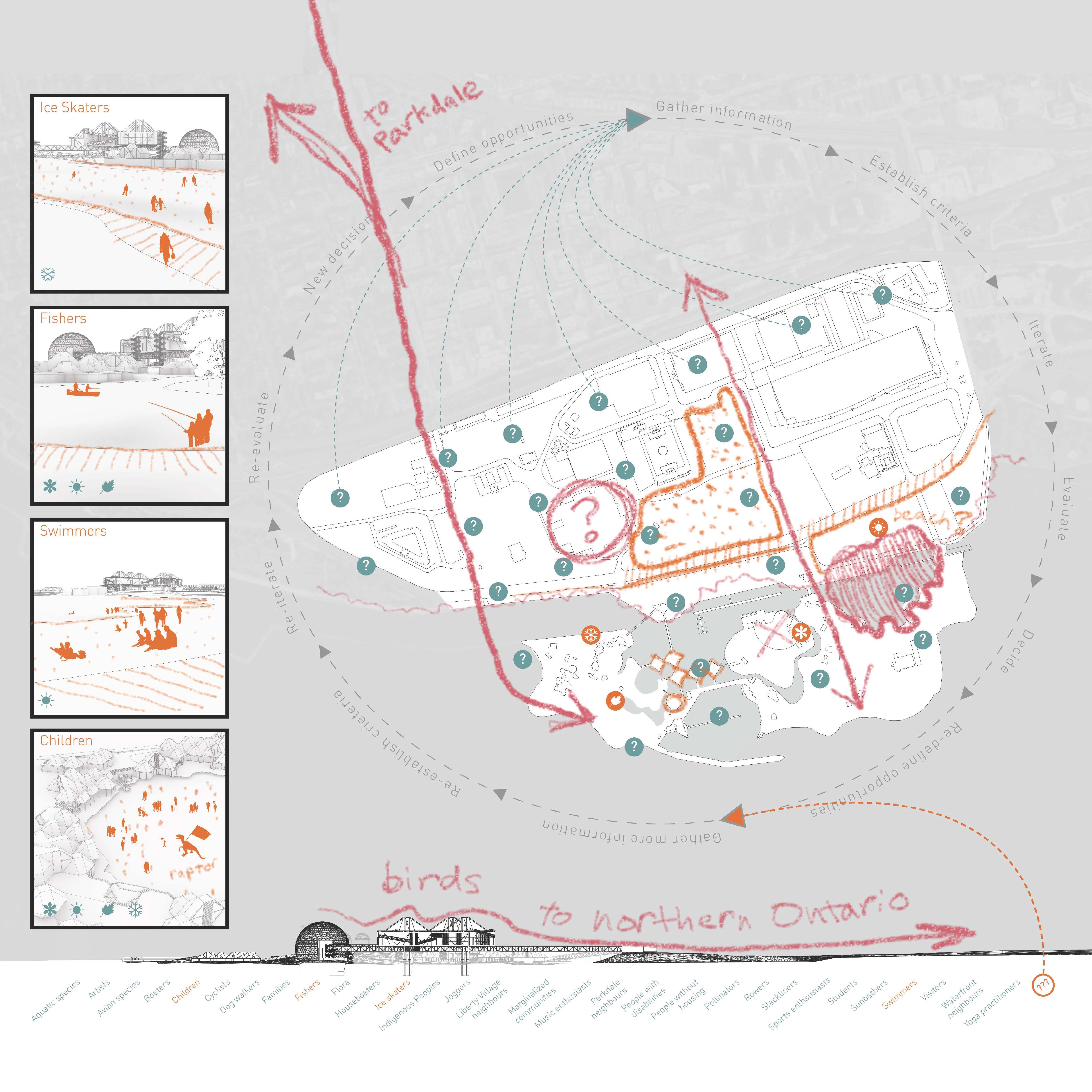
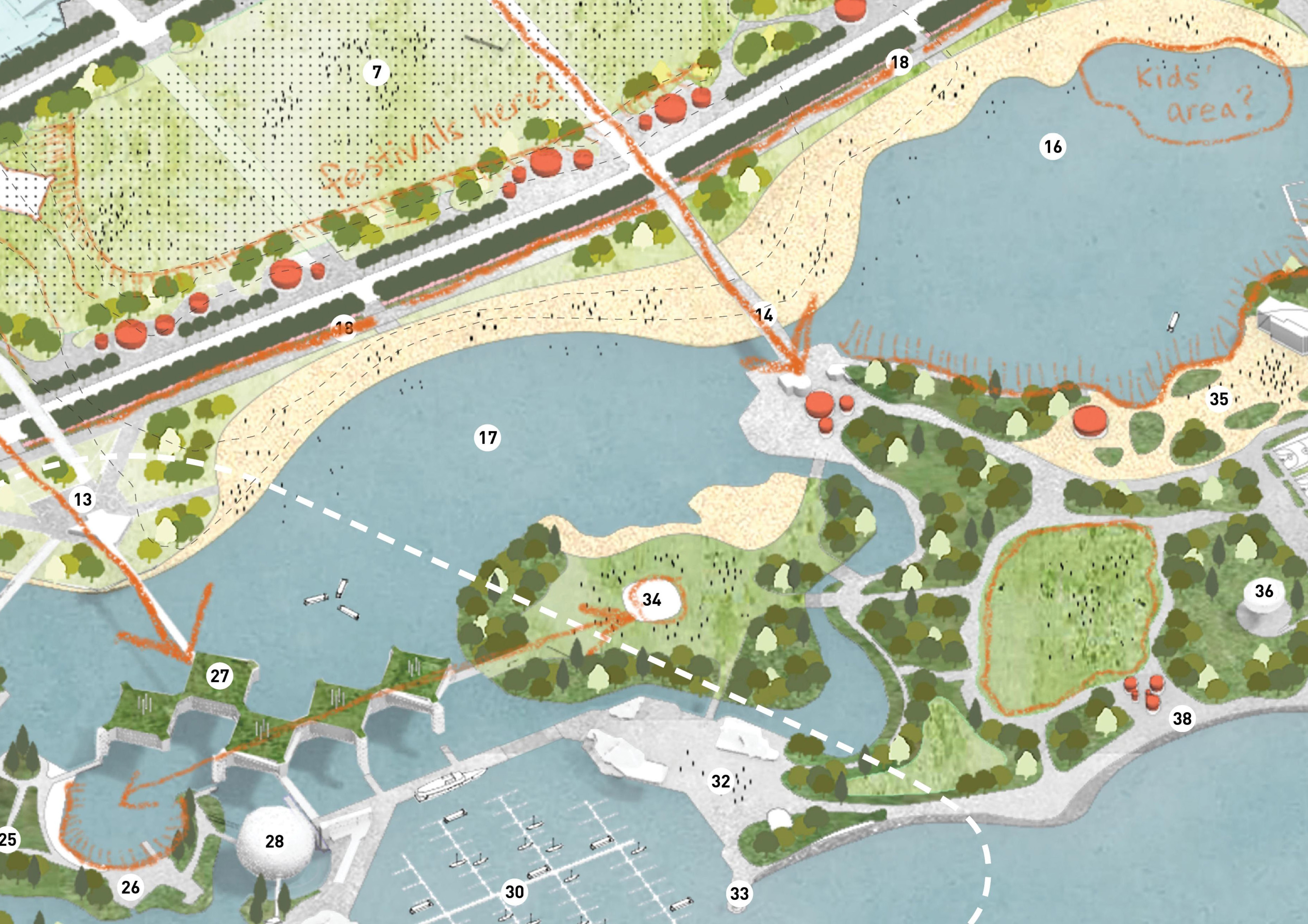
In response, my teammates (Joe Loreto and Catherine Howell) and I submitted an aspirational framework shaped by democratic principles that considered stakeholders who had not been consulted in the Province’s development of the site.
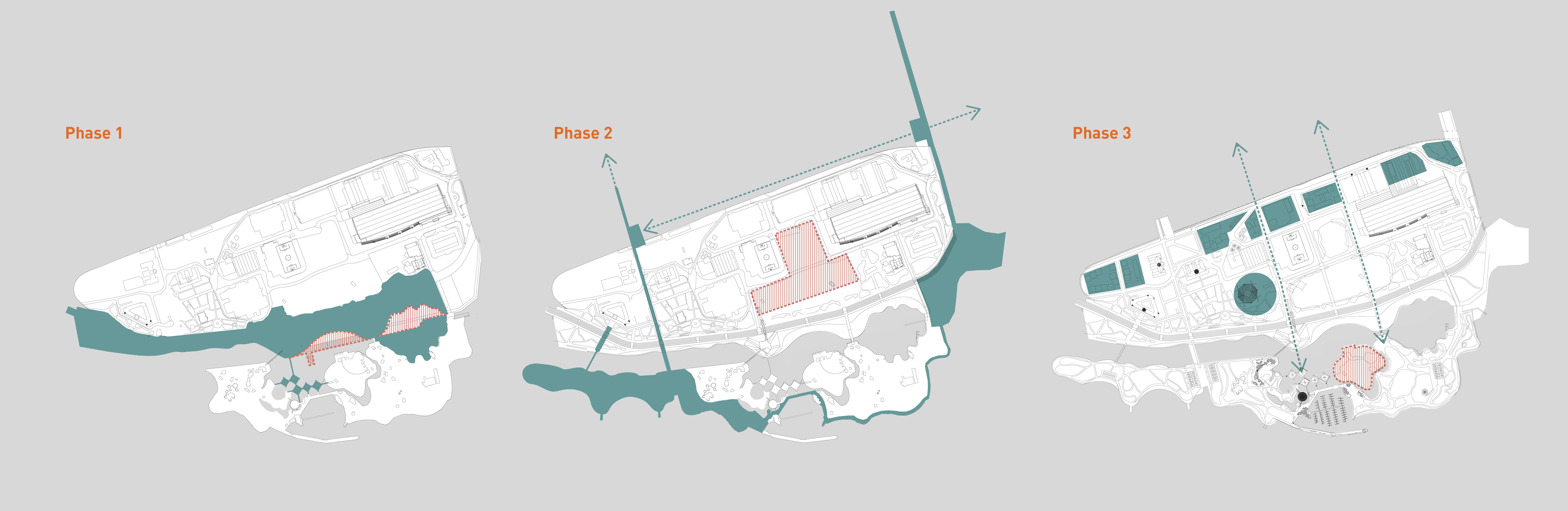
Our counterproposal began from two premises: Ontario Place is already a successful public park, and its future should be shaped through public contestation rather than announced after the fact. Titled “Megalandscape Ontario”, we crafted our drawings as if the counterproposal had already been co-authored by stakeholders, human and non-human, who had been excluded. It could continue to evolve through a phased framework that allowed disagreements about the site’s future to remain visible.
Rather than presenting images of a fully resolved design, our drawings attempted to illustrate collaborative debate and iteration; a phased timeline of possibilities; and the possibility that a public project might remain open to revision.
Yet in the contemporary professional practice of architecture, still shaped by patronage and hierarchy, finished objects are the commodity of value, with open images likely relegated to academia or leisure. When the practice of architecture is reduced to a service for a paying client, efficient execution and risk-mitigation become privileged over inquiry and critique. Constrained within this transactional dynamic, I learned first-hand how open images can be absorbed by the very power structures they hoped to question.
A corporate design firm I once worked for often celebrated publicly the personal design work and achievements of its employees. But after Megalandscape Ontario won the competition, our achievement received a muted response from the partners of the firm.
One partner pulled me aside and explained, sheepishly, that public recognition of my counterproposal might strain the firm’s relationship with the Province, their client for multiple lucrative projects. I told him I understood. Privately, I was bewildered. Surely a successful firm could tolerate a little speculative idealism?
Not so, it seemed. Even the mere implication of criticism by my counterproposal carried too much risk for my employer’s relationships with those in power. They instead preferred to uphold the myth that architecture can be politically neutral.
This revelation of the disciplinary conflict in architecture between critical and pragmatic practice was reinforced at another episode with the same employer. The chair of the company held an all-employee meeting where he attempted to ‘rally the troops’ by lauding the office’s work as that of technically proficient designers of “real” buildings, contrasted against what he characterized as the navel-gazing of out-of-touch, ‘ivory-tower’ academics.
More urgent than the well-trod academic debate over criticality, the chair’s polemic highlights a tacit and often unexamined assumption within traditional professional practice: that the primary task of architecture is to design a bricks-and-mortar building rather than question whether to build at all. That assumption has been challenged by Charlotte Malterre-Barthes’ call for a moratorium on new construction, and by renewed attention to architecture’s ecological consequences.
In traditional professional practice, however, buildings themselves are instrumentalized like their representational images. But even if framed as neutral, behind the frame are underlying processes, structures, and forces. They continue to churn beyond the frozen moment of the image and, like their architects, are never politically neutral.
For an architect as a political actor, representational images might not be the most persuasive of tactics. Remember that the digital images of Ontario Place were rendered from a computational model. The model condenses decisions made across finance, engineering, ecology, politics, regulation, and design. But if control is distributed, then what agency does an architect’s drawing retain as an image instead of an instruction? An architect armed with a sketchbook would argue plenty.
As an analytical method rather than a representational one, drawings can be used to critically reveal the systems that remain concealed. Extrapolating this tactic implies an expansion of the architect’s traditional role beyond designing buildings towards engaging with systems; to structure the conditions under which buildings are produced.
In addition to making such systems legible, architects could also actively deploy images as tools for political negotiation. Indeed, this was a principal motivator of our counterproposal for the Future of Ontario Place competition. We hoped our drawings might act as frameworks for imagination for a wide assemblage of publics to rethink their relationships with different ecologies and communities in the city.
I viewed the drawings as more than speculation about a built intervention. They were also speculation about a practice of architecture that could make the politics of design harder to hide.
With architects acting as political negotiators, practice becomes less concerned with producing buildings and more concerned with structuring the conditions under which collective decisions are made.
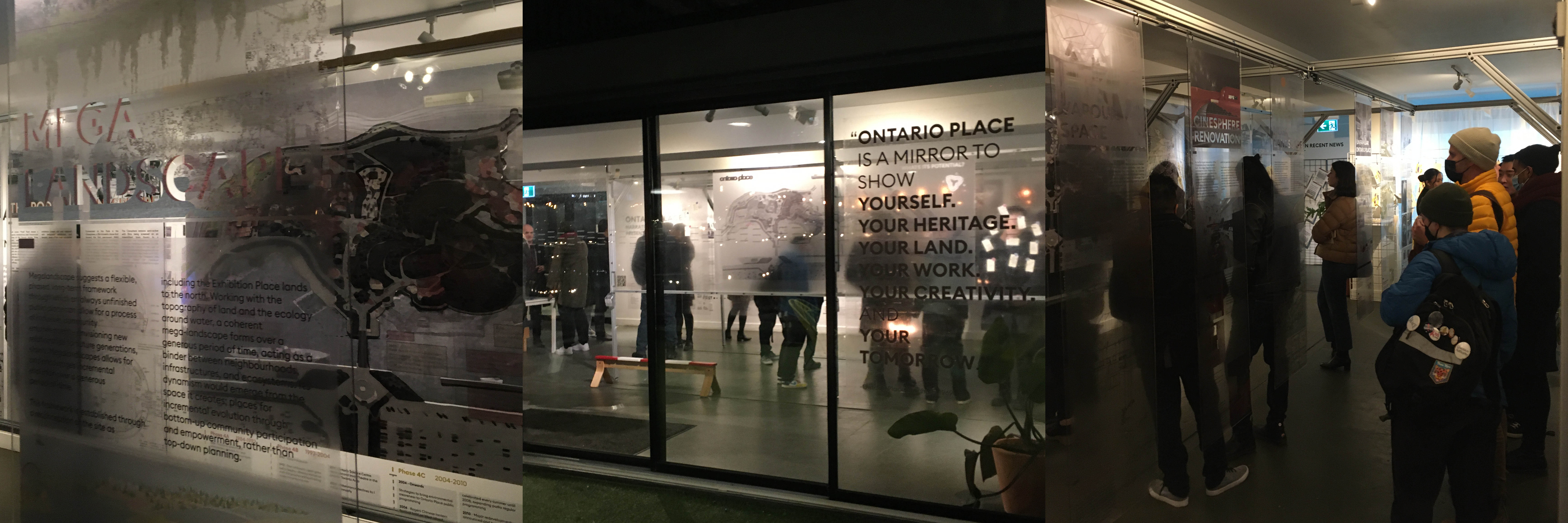
As an example, architect Quan Thai, in collaboration with the OP-ED collective, curated a featured exhibition at the January 2023 DesignTO Festival that offered a different model of practice. Titled “Ontario Place - Narrating Past, Present, and Potential”, the exhibit was explicitly political and combined historical research with a variety of speculative design proposals to critique private redevelopment of Ontario Place and to advocate for the preservation of Toronto’s waterfront as a public asset.
Radically different proposals were displayed next to each other, alongside the Province’s scheme. Yet at this exhibition, the conflicting schemes shared the same space under one roof and were in a respectful dialogue with each other. Confrontation and discussion were encouraged, highlighting a plurality of values.
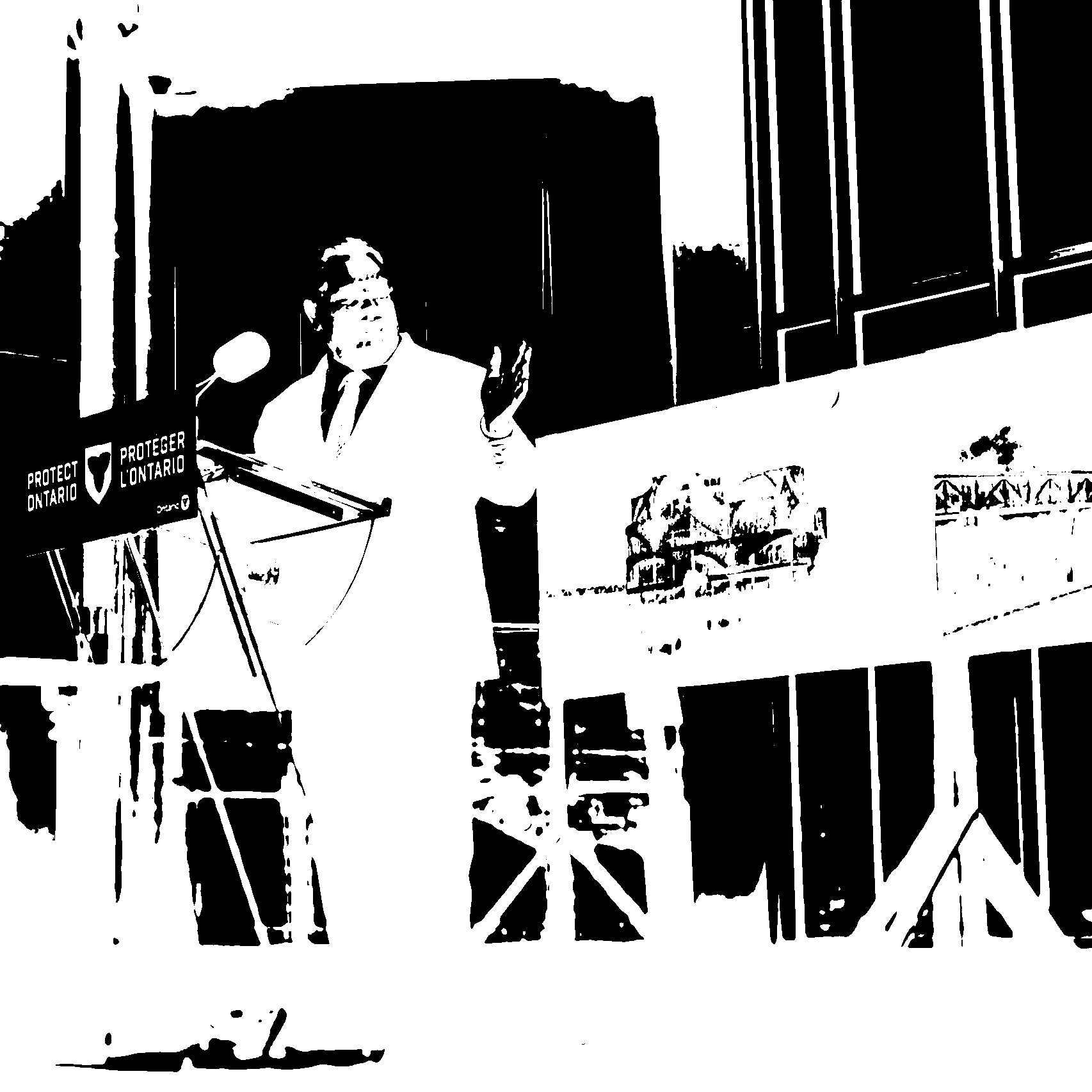
It was at this exhibition that I was able to speak about Megalandscape Ontario with Deputy Mayor Ausma Malik and Ontario Place For All Co-Chair Norm Di Pasquale. They didn’t agree with everything in our counterproposal, but it continued to serve as a medium for further conversations on public space and democracy.
Political theorist Chantal Mouffe argues that democracy requires productive disagreement and warns against a 'post-political' trend, where governments treat complex social issues as mere technical problems to be solved by experts, rather than debated in public.
Instead of just nullifying disagreement under the alibi of technocratic expertise, architects could expand their practice to negotiate the conflict inherent in distributed systems. In such a practice, images would not promise certainty. They would help publics argue over what should be cared for, by whom, and for how long.
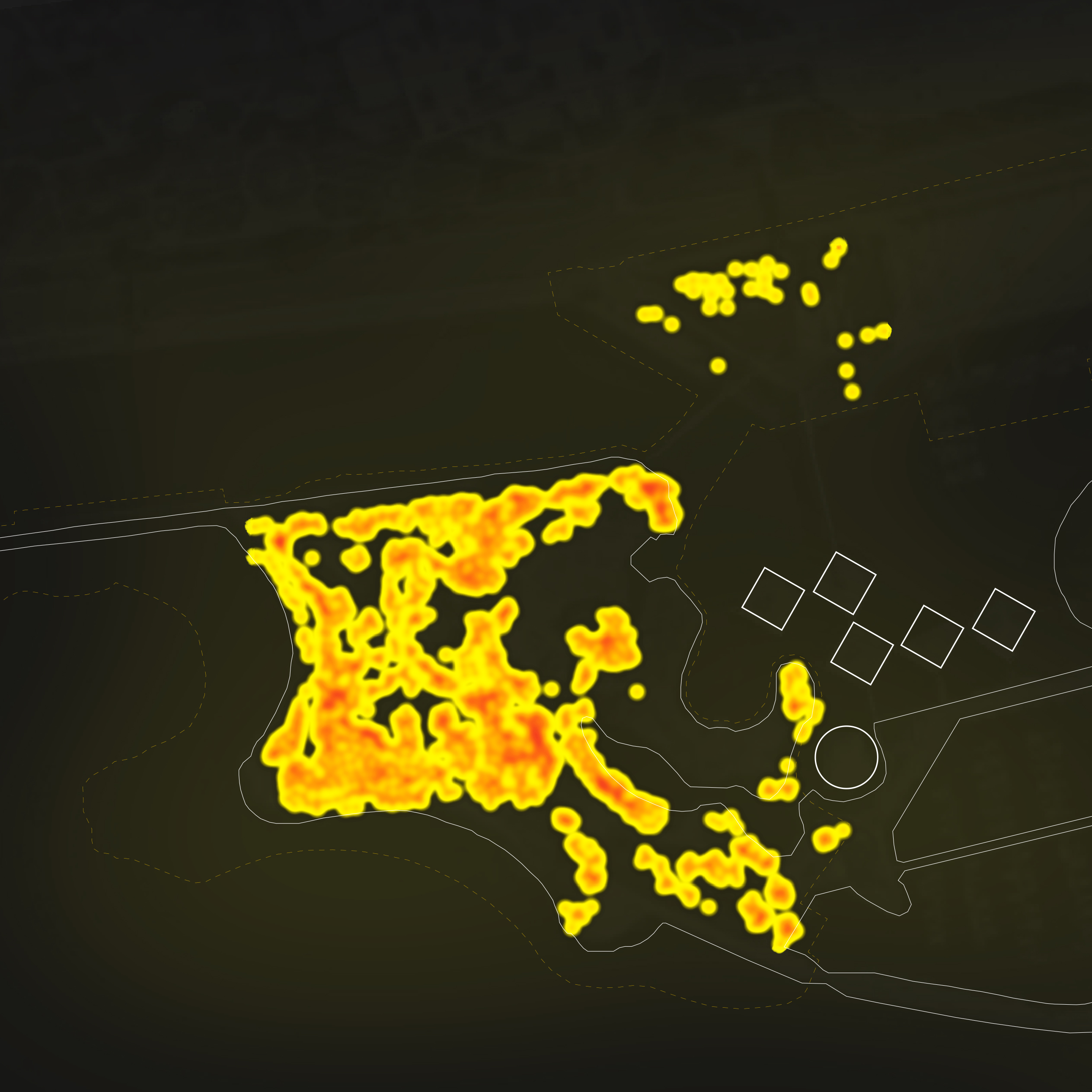
So close your eyes and imagine Ontario Place as part of a hidden architecture of sewage lines, public investment, lease agreements, and displaced urban habitats. It can’t be reduced to an image. It is a living system.
Now open your eyes and consider one possible future: threatened birds crossing a sterile lake, raw sewage shunted into stagnant lagoons, a wall of glass interrupting a migratory path, and pedestrians looking up at a private spa where a forest once stood.
Someone wakes from this image and realizes that this nightmare is only the afterimage of decisions made elsewhere: of public land leased away, of ecological risk marginalized, of 865 trees cut down under the cover of night on October 2, 2024.
What has been presented as a premonition is only a negotiation.